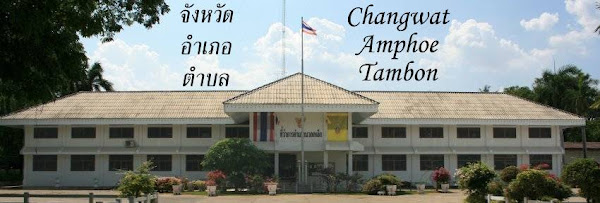
Thursday, November 17, 2011

Province governor reshuffle list 2011

In the cabinet meeting on Tuesday, apart from the controversial Royal pardon, the list of the annual province governor reshuffle was approved, moving 32 officials from or to province governor posts. The complete list as found in the cabinet meeting transcript is below. I only cannot find yet at which date the transfers become effective. The romanization of the Thai names was done by me and is probably often not identical with the spelling used by the corresponding officials.
  • Chonchuen Bunyanusan (นายชนม์ชื่น บุญญานุสาสน์) from a post in the Ministry to become province governor of Ratchaburi.
  • Wangchat Wongchaichana (นายวันชาติ วงษ์ชัยชนะ), province governor of Ranong to become Inspector-General in the MOI.
  • Phirasak Hinmueangkao (นายพีระศักดิ์ หินเมืองเก่า), Inspector-General in the MOI to become province governor of Ranong.
  • Surachai Chanasa (นายสุรชัย ขันอาสา), Director-General of the CDD to become province governor of Lamphun.
  • Praphat Bunyin (นายประภาศ บุญยินดี), province governor of Samut Songkhram to become Director-General of the CDD.
  • Thanon Wetkonkanon (นายธนน เวชกรกานนท์), province governor of Narathiwat to become province governor of Samut Songkhram.
  • Choetsak Chusi (นายเชิดศักดิ์ ชูศรี), province governor of Samut Prakan to Inspector-General in the MOI.
  • Wanida Bunprakhong (นางวรรณิดา บุญประคอง), Inspector-General in the MOI to become province governor of Samut Prakan.
  • Wichit Chatphosit (นายวิชิต ชาตไพสิฐ), province governor of Chonburi to become province governor of Chanthaburi.
  • Khomsan Ekchai (นายคมสัน เอกชัย), province governor of Udon Thani to become province governor of Chonburi.
  • Kaenphet Chuangrang (นายแก่นเพชร ช่วงรังษี), province governor of Amnat Charoen to become province governor of Udon Thani.
  • Wiyon Thongsakun (นายวิญญู ทองสกุล), province governor of Songkhla to become province governor of Phatthalung.
  • Kruesada Bunrat (นายกฤษฎา บุญราช), province governor of Yala to become province governor of Songkhla.
  • Thani Samarotkit (นายธานี สามารถกิจ), province governor of Buriram to become Inspector-General in the MOI.
  • Maitri Inthusut (นายไมตรี อินทุสุต), province governor of Trang to become province governor of Phayao.
  • Seni Chitotkasem (นายเสนีย์ จิตตเกษม), province governor of Nan to become province governor of Trang.
  • Phonsak Wangsemo (นายพงษ์ศักดิ์ วังเสมอ), province governor of Phayao to become province governor of Nan.
  • Winai Buapradit (นายวินัย บัวประดิษฐ์), province governor of Nong Bua Lamphu to become province governor of Phetchaburi.
  • Raphi Phongbupkit (นายระพี ผ่องบุพกิจ), province governor of Nakhon Ratchasima to become province governor of Nong Bua Lamphu.
  • Chuan Sirinanphon (นายชวน ศิรินันท์พร), province governor of Phrae to become province governor of Nakhon Ratchasima.
  • Kitti Sapwisut (นายกิตติ ทรัพย์วิสุทธิ์), province governor of Chachoengsao to become Inspector-General in the MOI.
  • Roengsak Mahawinitchaimontri (นายเริงศักดิ์ มหาวินิจฉัยมนตรี), province governor of Nakhon Phanom to become province governor of Chacheongsao.
  • Nattaphon Wichianphrit (นายณฐพลษ์ วิเชียรเพริศ), province governor of Kanchanaburi to become Inspector-General in the MOI.
  • Somchai Thathayatin (นายสมชัย หทยะตันติ), province governor of Chiang Rai to become Inspector-General in the MOI.
  • Thira Minsasak (นายธีระ มินทราศักดิ์), province governor of Nakhon Ratchasima to become province governor of Pattani.
  • Wirong Chiwarangsan (นายวิโรจน์ จิวะรังสรรค์), province governor of Kalasin to become province governor of Nakhon Si Thammarat.
  • Somsak Suwansutrit (นายสมศักดิ์ สุวรรณสุจริต), province governor of Sisaket to become province governor of Kalasin.
  • Somphong Arunrongpanya (นายสมพงษ์ อรุณโรจน์ปัญญา), province governor of Bueng Kan to become province governor of Loei.
  • Phonsak Chianyai (นายพรศักดิ์ เจียรณัย), province governor of Loei to become province governor of Bueng Kan.
  • Charinot Chakkaphak (นายจรินทร์ จักกะพาก), province governor of Chaiyaphum to become province governor of Sakon Nakhon.
  • Saroem Chaiyanrong (นายเสริม ไชยณรงค์), province governor of Surin to become Inspector-General in the MOI.
  • Niran Kanyanikhon (นายนิรันดร์ กัลยาณมิตร), Deputy Director-General in the MOI to become province governor of Surin.
Finally, the term of Somsak Phurisisak (นายสมศักย์ ภูรีศรีศักดิ์), governor of Suphanburi has been extended till September 2012, if I understand right he was originally set to retire this year. Interestingly, he is in office since 2006, really long as most governors get transferred after one or two years already.

The cabinet list also includes the change for the Director-General of the Department of Local Administration (DOLA), now led by Weerayuth Iamampha (นายวีระยุทธ เอี่ยมอำภา).

This list is not the complete reshuffle list yet, as the promotions of deputy province governors to province governors will probably be done in one of the next cabinet meetings.

Monday, November 14, 2011

Municipal boundary changes

Four municipalities changed their boundaries with a neighboring TAO, with the corresponding announcements published in the Royal Gazette last week.

Friday, November 11, 2011

District officer home in Surat Thani

Even though it is located on the main street through the city of Surat Thani, I only noticed the building in my latest stay there - the official residence of the district officer of Mueang Surat Thani district. I knew that the province governor has an official residence in the city, which from the outside looks quite representative - see the posting on the administrative offices in Surat Thani - but didn't before found a similar place for the lower administrative levels. Well, except for the village headmen, which usually have their normal home as their office as well.

But given the fact that district officers are also shuffled around the country same as province governor, often only staying one year at a given office and ordered to report to new locations on rather short notice, it makes sense that the government provides adequate housing for them. Obviously, the district officer home is far less representative than the province governor villa.

Wednesday, November 9, 2011

City Pillar of Phana, Amnat Charoen

City pillar of Phana
photo courtesy of Lawrence
At the small municipality of Phana in Amnat Charoen province, there are big plans for the city pillar (Lak Mueang, หลักเมือง). The blogger Lawrence who lives in this remote town in the northeast of Thailand reports on the history of the pillar and the way more ancient four corner stones, which are already nearly hidden due to the higher street level. The pillar itself is only ten years old, as it was erected when the almost forgotten corner stones were unearthed. These corner stones however are already 300 years old.

The municipality now plans to build a real shrine for the city pillar, judging from the drawing would be of similar size as the city pillar shrines in the provincial capitals. The shrine will however be build near the current site, and the spirits of the pillar were already notified about the change as well.

One could of course wonder why a small municipality, which is not even the seat of the district office, should have such a big city pillar shrine, or why it actually has a city pillar at all - there are still some provinces which have no city pillar in their capital. But historically, Phana was more significant in the past than it is today. In 1879, it became a Mueang under Ubon Ratchathani, at that time named Phana Nikhom (พนานิคม). With the thesaphiban reforms, this Mueang became a district within the province, and since the district office went to Ban Khulu (according to amphoe.com this was in 1914) it was renamed accordingly in 1917 [Gazette]. That district is today Trakan Phuet Phon of Ubon Ratchathani. The present district of Phana was created in 1951 by splitting of the area around the historical origin from Trakan Phuet Phon [Gazette]. The current district office is however a bit outside the historical center in Phra Lao subdistrict.

I wasn't aware of Phana's historical grandeur, and only with to the comments of Lawrence was hinted that I should have checked my own sources which already have all the answers. Especially the list of Mueang in Isan I still haven't found the time and patience to work through...

Monday, November 7, 2011

Muban of Bangkok

While looking at the flood maps provided by Longdo to check whether my wife's house escaped inundation, I spotted placemarks for village headmen offices (ที่ทำการผู้ใหญ่บ้าน) in Taling Chan district. Some time ago, I already wrote about a similar office further west in Thawi Watthana district, since to my knowledge the administrative villages within Bangkok were already abolished by 2005.

Actually, I had seen the sign in front of that specific office many times already while driving past it, but never stopped there for a short photo. No name is given for that village, only that it is village 10 of Bang Phrom subdistrict, so I got curious and tried to find at least how many villages each of the subdistricts actually has. Only thing Google returned was an obscure Excel sheet from the Ministry of Education, which contains the geocodes of the villages and several columns of numbers - if I guess right it is the number of children for the ages 0 to 20. And it also contains the strange Muban 77 and 78, so these are really the administrative villages I was looking for.

According to that sheet, there are a total of 810 administrative villages - a bit more than the 279 which in 2005 still had headmen. There are also some strange numbers, for example Don Mueang subdistrict only has the villages number one, four, five and eleven, and the newly created Sanam Bin subdistrict only village nine. The fact that Sanam Bin is already inside this sheet shows that it is rather up-to-date, therefore these villages are still existing at least for statistical or registration purposes.

Friday, November 4, 2011

New Municipalities announced

Another set of three TAO has been upgraded to subdistrict municipalities and published in the Royal Gazette on Tuesday.
Additionally, the transfer of some area between the TAO Tha Duea (องค์การบริหารส่วนตำบลท่าเดื่อ) and the subdistrict municipality Tha Duea (เทศบาลตำบลท่าเดื่อ), Doi Tao district, Chiang Mai province, was announced, as usual in two announcement, one covering the municipality which includes the map, and one covering the TAO. Interestingly, according to Longdo Map the office of the TAO is actually located within the municipal area.

Friday, October 28, 2011

Decentralization at the 1997 constitution

In the 2002 book "Reforming Thai politics", edited by Duncan McCargo containing 16 chapters by different scholars in Thai studies, I found a very interesting paragraph on the decentralization with the 1997 constitution in the introduction chapter. I have only read the introduction of the book so far, but want to share this quote already now.
At the core of structural impediments to reform in Thailand lay the extraordinary degree of centralization. With the honourable exception of the Bangkok Metropolitan Authority, Thailand had no local government truly worthy of the name in 1997. While liberalism and pluralism were flourishing at the national level, out in the countryside provincial governors and other state officials continued to exercise an exceptional degree of political control. There were elected municipal and provincial councils, but these were weal bodies whose powers were tightly delimited by Bangkok ministries. The great majority of councils had been captured by construction contractors and other business interests. Crucially, moves to make the office of provincial governors an elected position were firmly resisted throughout the constitution-drafting process. As career bureaucrats in the Interior Ministry, sent out from the capital to administer in a quasi-colonial fashion, provincial governors were one of the largest obstacles to progressive change. Indeed, while Thailand's political order was undergoing extensive reform during the second half of the 1990s, the officials in numerous provinces were building themselves immense new salakan changwat (provincial halls) at vast expense. These monumental structures symbolized their determination to resist the forces of decentralization at literally any cost. [...]